 PET-SHEET.COM


How to Specify PET Sheet for Printed Folding Boxes

The quotation says “print-grade PET,” and the flat sample looks clear. Before placing the rollstock order, however, your printer asks which side is treated, the box converter asks about crease quality, and the adhesive supplier wants to know what surface the glue will contact. The material description has left the most consequential questions unanswered.
For a printed folding box, specify PET sheet around the complete converting sequence. Corona treatment is a relevant surface specification, but it does not, by itself, establish ink adhesion or compatibility with folding and bonding. We would give those interfaces more weight than a generic print-grade label.
Define the printing method, ink system and folding-box requirements
Start with the artwork and box drawing. A mostly clear display box with a small printed logo presents different acceptance priorities from a box with heavy ink coverage across several folds. Identify the visible panels, clear windows, fold lines and bonding areas before comparing sheet quotations.
The specification needs to connect three groups of information:
- Printing: intended printing method, ink system, curing or drying method, printed face and any primer, varnish or other finishing layer.
- Box construction: dimensions, intended contents, display requirements, fold locations, closure design and bonding method.
- Converting sequence: the order of printing, finishing, creasing, die cutting, folding and bonding, including any storage between operations.
We usually start with that sequence because it identifies which surfaces must accept ink and adhesive, and where the printed layers must tolerate folding. It also prevents a quotation from addressing printing while overlooking the glue flap.
For purchasing purposes, “suitable for printing” is too broad. A more useful requirement identifies the intended ink and finishing system, the treated face, and the agreed acceptance checks on the converted box. The printer and box converter need to help define those requirements; the sheet manufacturer cannot establish them from the polymer name alone.
Specify the treated side and agree surface acceptance requirements with the printer
A treated-side requirement must be unambiguous when the roll reaches the printer. State whether treatment is required on one side or both, how the treated face will be identified, and how it relates to the inside or outside of the wound roll. Include the unwind direction needed by the receiving operation.
Two-sided treatment should follow an actual requirement. Printing on one face and bonding on the other may create separate surface needs, but that does not justify assuming the same treatment requirement for both.
Agree what the surface measurement will establish
Corona treatment modifies the surface to support wetting. A dyne measurement can help assess surface wetting condition, but it does not prove that a particular ink will remain attached after curing, folding or handling.
There is no universal dyne level to prescribe for every printed PET folding box. Agree the surface acceptance requirement with the printer around the intended ink system. Record the measurement method, sampling locations, acceptance stage and responsibility for checking the material.
Timing belongs in that agreement. If the roll will be stored before printing, discuss the expected interval and storage conditions rather than relying solely on a measurement taken at manufacture. Surface condition at the point of use matters to the printing decision.
Our recommendation is to keep the two acceptance questions separate: does the surface meet the agreed wetting requirement, and does the actual printed construction meet the agreed adhesion requirement? Passing the first does not automatically answer the second.
Identify other surface treatments
Ask whether either face has silicone coating, an anti-block formulation, a hard coating or another functional treatment. These details belong in the sheet specification because the ink or adhesive contacts the surface, rather than an abstract PET material name.
Do not substitute a silicone coated PET sheet roll or an anti block PET sheet roll solely because its gauge and width match. Confirm printing and bonding compatibility for the particular construction. Equally, a non-silicone description alone is not proof of adhesion.
Assess ink adhesion alongside creasing, die cutting and bonding compatibility
A flat printed sample answers only part of the purchasing question. The sheet still has to become a box without unacceptable damage to its graphics, folds or bonded joint.
For appearance-sensitive packaging, approval based only on a small, unconverted sample is premature. A defect that seems minor on flat stock may sit directly across a logo or clear display panel on the assembled package.
Use the intended construction to distinguish the following requirements:
| Area to assess | What to agree before approval | Purchasing implication |
|---|---|---|
| Ink adhesion | Test method, conditioning, evaluation timing and acceptable ink removal | Connect acceptance to the actual ink and surface combination |
| Creased and folded areas | Acceptable whitening, cracking, ink disruption and fold appearance | Assess sheet gauge and construction alongside the intended crease design |
| Die-cut edges | Acceptable edge appearance, cracking and dimensional results | Avoid approving stock on print appearance alone |
| Bonded joint | Adhesive, contact surfaces, joint design and acceptance method | Establish whether the adhesive contacts bare PET, ink or a finishing layer |
| Finished presentation | Agreed standards for scratches, haze, colour and visible defects | Judge the assembled box against its retail appearance requirements |
A failed fold does not identify the sheet as the sole cause. Gauge, material construction, crease design and converting conditions can all contribute. Likewise, ink loss near a fold needs to be distinguished from cracking in the underlying sheet. These observations help direct the investigation without turning material purchasing into machine-setting advice.
Bonding deserves its own approval. If adhesive lands on printed or varnished material, the joint depends on that layer as well as the adhesive. Mark bonding areas on the artwork and agree whether they will remain unprinted or receive a specifically evaluated construction.
We would not approve the rollstock from a dyne reading and an attractive print proof while leaving the folded and bonded box unevaluated. The useful approval is a documented combination of sheet, surface, ink, finish and adhesive, assessed through the intended sequence.
Define gauge, appearance and roll dimensions for the intended box
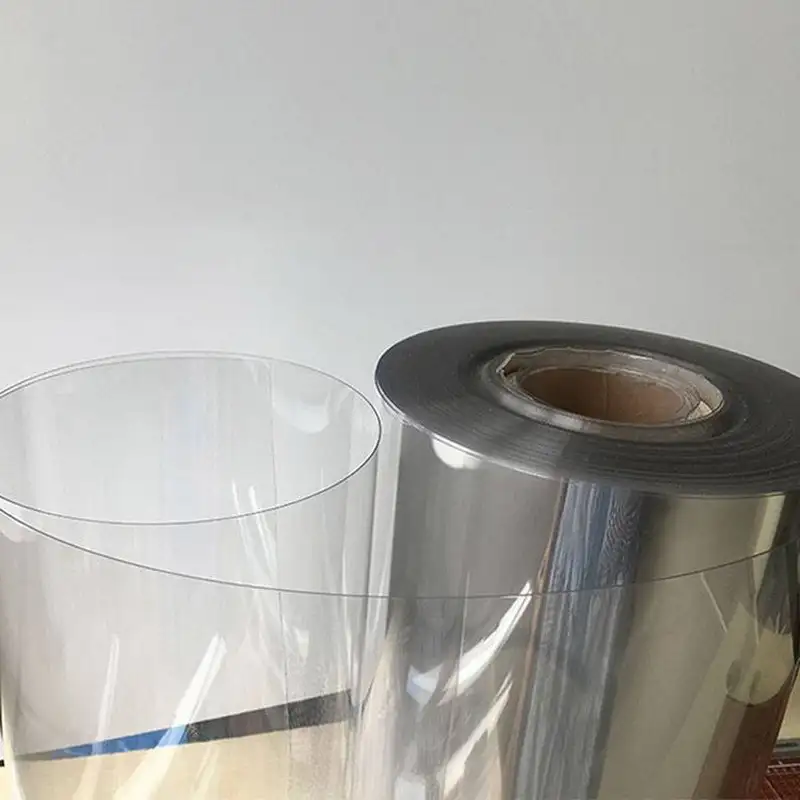
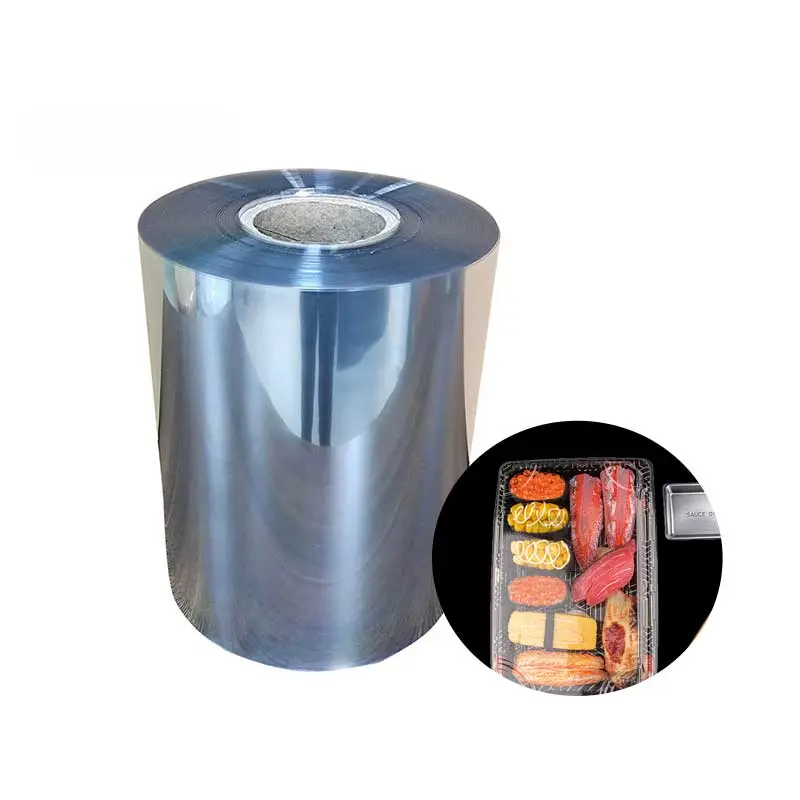
DESU offers corona-treated print-grade PET / R-PET sheet for printed folding boxes, gifts and display packaging, with thickness options from 0.18–1.7 mm and widths from 250–1400 mm. Availability should be confirmed for the selected material, gauge, colour and roll format.
That supply range is not a recommended folding-box thickness range. Select the gauge around panel size, required rigidity, contents, closure design and crease performance. A thicker sheet may support greater panel rigidity, but it also changes folding demands and material consumption. Increasing thickness is therefore a poor first response to a crease problem whose cause has not been established.
Specify nominal thickness together with the agreed tolerance and measurement approach. Width needs to accommodate the converting layout and receiving equipment, rather than simply matching the widest available roll. State core dimensions, maximum roll diameter, acceptable roll weight, winding orientation and splice requirements as project inputs.
Appearance needs equally clear boundaries. Agree colour or tint, haze expectations, scratches, gels and other visible defects against an approved visual standard. Inspect the assembled box under lighting representative of its intended display, especially where clear areas frame the product.
If recycled content is being considered, define the content requirement separately from appearance and converting acceptance. Do not assume that substituting R-PET leaves colour, visible-defect tolerance or the approved surface specification unchanged. We would establish those limits before comparing the alternatives on price.
For repeat orders, retain the agreed specification and approved box reference. Where brand presentation is critical, request repeat samples or relevant batch information to assess consistency beyond one exceptional sample. Compare quotations against that same acceptance baseline; a lower roll price has limited value if more boxes are rejected.
FAQ about PET sheet for printed folding boxes
How long can corona-treated PET be stored before printing?
Agree the storage interval and conditions with the sheet supplier and printer for the selected material. Do not assume a fixed treatment life across all constructions. Include a surface acceptance check at the agreed point before printing, particularly when the purchasing plan involves extended storage.
Can a printer retreat PET that does not meet the agreed surface requirement?
Retreatment may be an option if the printer has suitable capability and the sheet construction permits it. Agree the approach with the sheet and ink suppliers before proceeding, then reassess the relevant surface and adhesion requirements. Additional treatment alone does not establish compatibility with ink, coatings or adhesive.
Does food-grade PET automatically qualify a printed folding box for food contact?
No. A food-grade sheet description does not establish the suitability of the complete printed package. Define whether food contact is intended, the contact conditions and destination-market requirements, then obtain applicable documentation for the sheet, inks, coatings and adhesive used in that construction.
What changes require the approved sheet specification to be reviewed?
Review changes to the material construction, recycled-content requirement, gauge, surface treatment, printed side, ink, finishing layer, adhesive or converting sequence. Assess the requirements affected by each change rather than assuming the original approval covers a different combination.
Send DESU the artwork, converting sequence and sheet requirements
Send DESU your artwork and box drawing, printing method and ink system, converting sequence, bonding details, target gauge, appearance requirements and roll dimensions. Include any agreed surface acceptance criteria and an existing approved sample where available, so we can discuss a sheet specification around the box you intend to make.
Related Articles
CONTACT PET-SHEET.COM
Our professional sales staff and technicians will determine the final characteristics of the product and material solution for the customer specific application and will provide the customer with a quote and a detailed time schedule, Please fill the form to contact our professional sales team.- Main Category
- APET Sheet Roll
- ESD Antistatic PET Sheet Roll
- GAG Sheet Roll
- PETG Sheet Roll
- RPET Sheet Roll
- Thermoforming PET Sheet Roll
- Latest Products