 PET-SHEET.COM


How to Specify RPET Sheet When Recycled Content and Clarity Both Matter
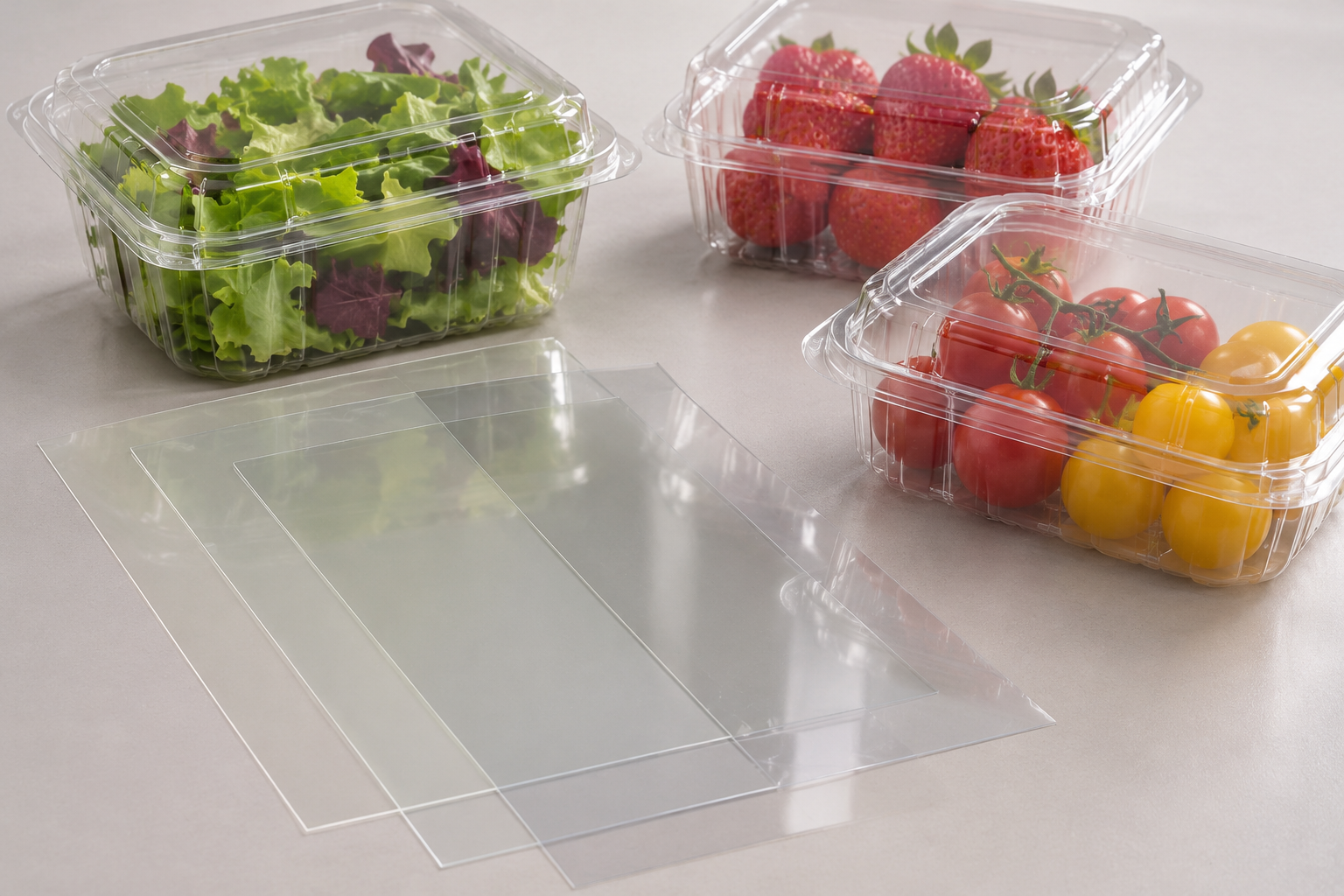
A produce brand asks for more recycled content in its tray, while the appearance brief still says the fruit must look as clear and bright as it does in the current package. You send the recycled-content target to several sheet suppliers. Their quotations describe RPET sheet, but the samples show different tint, cloudiness and visible specks.
Which one meets the brief?
The recycled-content percentage cannot answer that question alone. Specify the content objective and the appearance acceptance criteria together, then assess the proposed sheet in the intended package. We would settle those two requirements before comparing quotations: otherwise, each quotation may represent a different interpretation of acceptable material.
Define the recycled-content objective and required product visibility
Start with what the brand has actually committed to. Is the requirement a minimum recycled-content percentage, a specific post-consumer recycled content target, or a preference that remains open to discussion? State whether the target applies to the supplied sheet or to the complete package. A sheet declaration does not automatically describe a package containing other components.
Then describe what the shopper needs to see. For a produce tray, the critical area might be the broad base, the sidewall through which fruit is viewed, or the entire clear pack. Include the package drawing, intended sheet gauge and the appearance of the current approved package where one exists.
“High clarity” leaves too much room for interpretation. Does it mean a nearly colourless appearance, low cloudiness, few visible defects, or sufficient visibility to judge the produce? These requirements overlap, but they are not interchangeable.
Our recommendation is to identify the viewing areas that matter most before asking for the clearest possible sheet. A demanding appearance requirement across every surface can narrow sourcing options without improving how the product looks on the shelf.
Balance the content target with tint, haze, visible defects and formed appearance
A typical produce-packaging challenge is a request to increase PCR content while retaining the appearance of the existing tray. The mistake is assuming that sheets with different recycled-content percentages will look identical—or that two sheets with the same percentage will look identical.
Recycled content can affect clarity and processing consistency, but the percentage is only one part of the material specification. Feedstock quality and consistency, material preparation, formulation and extrusion control can also influence the result. A percentage is evidence about composition; it is not an optical quality grade.
Separate the appearance characteristics
Tint is the colour cast visible through the material. Haze is the cloudy appearance that reduces the sharpness of what is seen through it. A sheet can appear relatively transparent while still having a noticeable tint. Visible specks, gels, streaks and scratches create a separate acceptance issue: an otherwise clear tray can still look unsuitable if a defect falls in a prominent viewing area.
Use separate criteria for these characteristics rather than one general instruction to supply “clear RPET.”
| Appearance factor | What to agree before ordering | Why it affects the decision |
|---|---|---|
| Tint | An acceptable colour reference or agreed measurement and limits | A colour cast may change how the produce is perceived |
| Haze | A visual reference and, where needed, an agreed measurement method and limit | Cloudiness can obscure product detail even when tint is acceptable |
| Visible defects | Defect types, size categories, permitted frequency and inspection area | An isolated speck and a recurring streak require different acceptance decisions |
| Surface appearance | Acceptable scratches, marks and streaks under defined viewing conditions | Surface defects may remain conspicuous after forming |
| Formed appearance | Approved package samples and the areas to inspect | Flat-sheet approval alone does not establish the appearance of the finished tray |
No universal numerical limit fits every produce package. Agree limits with the sheet supplier and the brand using representative material, rather than inserting an arbitrary haze or defect value into the purchase specification.
Judge the proposed sheet at the intended gauge and geometry
A small flat sample is useful for initial comparison, but it does not show the whole package. Gauge, local wall thickness, corners and overlapping surfaces can change the visual impression. Compare candidate sheets at the intended gauge, then inspect representative formed parts with the intended produce under consistent lighting.
Keep the material comparison controlled. If gauge, surface treatment and package geometry all change between samples, it becomes difficult to tell which difference caused the appearance change.
We would give the formed viewing areas more weight than an attractive loose swatch. Record forming observations alongside appearance, but keep the purchasing question clear: does this sheet meet the agreed package requirements consistently?
Decide which requirement can move
If the proposed material meets the recycled-content target but misses the appearance standard, establish what is negotiable before changing the specification.
Where the content target is fixed, discuss alternative feedstock quality, tighter colour control or other sheet options with the supplier, then evaluate their feasibility and cost. These are options to investigate, not guaranteed remedies. Where the target is flexible, compare alternative content levels against the same appearance baseline. Do not assume that reducing recycled content is the only solution, or that increasing it always causes an unacceptable result.
My engineering view is that appearance tolerance deserves particular attention in retail packaging: a cosmetic difference that is acceptable in an industrial tray may be unacceptable around a product on display. That is a reason to define expectations early, not a reason to reject RPET as a material category.
The useful comparison is the price of material that satisfies both agreed requirements. A lower RPET price has little purchasing value if the quotation allows appearance variation that the brand will reject.
Clarify recycled-content definitions and supporting supplier evidence
Once the appearance requirement is clear, make sure the content declarations are comparable. RPET identifies recycled PET, but the name alone does not establish the proportion or origin of the recycled material.
PCR refers to post-consumer recycled material. Pre-consumer recycled material has a different origin, so a declaration of total recycled content does not, by itself, establish the PCR share. Ask the supplier to state each relevant proportion and the basis used to calculate it.
For a multilayer sheet, clarify whether the quoted percentage applies to the whole sheet or only to a particular layer. Also distinguish a physically incorporated content declaration from an allocated content claim; request an explanation of the basis whenever the wording is unclear.
Before approval, request documentation that identifies:
- The proposed sheet grade or construction and declared recycled-content basis.
- The total recycled-content percentage and PCR share relevant to the order.
- The lot or delivery to which the declaration applies.
- The supporting traceability documents and how they connect to roll identification.
- Any required third-party evidence, including its scope and applicability to the proposed supply.
We would keep this evidence separate from the optical acceptance record. Traceability supports the content declaration; appearance inspection establishes whether the material meets the visual specification. Neither replaces the other.
Agree representative samples and repeat-order acceptance criteria
Ask whether the submitted sample represents the proposed production supply, including gauge, construction, surface condition and recycled-content target. Retain identified flat-sheet samples and representative formed parts. A photograph can help explain a defect, but lighting and camera settings make it a weak sole reference for subtle tint or haze differences.
Agree the inspection conditions before using those samples as acceptance standards: lighting, background, viewing distance, inspection area and whether assessment covers empty or filled packs. Where instrumental measurements are required, define the method and specimen conditions so the results are comparable.
For repeat orders, the purchase specification needs a practical acceptance plan. Define the lot, roll-sampling approach, sampling positions, checks to perform and action when results fall outside the agreed criteria. Record the lot and roll identification with inspection results so a disputed delivery can be investigated.
One point we would insist on is a written distinction between the preferred appearance and the acceptance boundary. A single excellent sample shows what is possible; agreed boundary samples or measurable limits explain what is acceptable.
Request representative repeat samples or relevant batch results where consistency is critical. Agree which material or construction changes require notification and renewed approval. This gives repeat purchasing a stable baseline instead of reopening the meaning of “clear RPET” with every shipment.
Approve the sheet when the content evidence, appearance assessment and application evaluation support the same specification. If one remains unresolved, keep that issue open rather than allowing a favourable result elsewhere to stand in for it.
FAQ About RPET Content and Clarity
Can an existing virgin PET tray be used as the appearance reference?
Yes. Use it to communicate the desired appearance, then agree which characteristics the proposed RPET sheet must match and where variation is acceptable. Identify the reference package and its gauge, and retain an approved RPET sample once the specification is settled so future orders have a relevant comparison.
What if a sheet passes the haze check but still looks wrong around the produce?
Check tint, local defects, surface marks and the formed viewing areas separately. Haze measures only part of the appearance requirement. Compare the package with the approved reference under the agreed lighting and background, and identify the specific characteristic that differs before requesting a material adjustment.
Can chilled-display fogging be handled through the clarity specification alone?
No. Condensation can obstruct visibility even when the sheet itself meets the optical specification. If chilled display is part of the application, assess visibility under the intended filling and storage cycle and discuss any anti-fog requirement separately from tint, haze and visible-defect limits.
Should a change in recycled-content percentage require new sample approval?
Yes, when the change falls outside the approved specification. Request an updated content declaration and assess representative material against the existing appearance and application requirements. Keep the acceptance baseline consistent so the effect of the proposed change can be judged clearly.
Share your application and RPET sheet requirements
Contact DESU with the produce application, package drawing, recycled-content target, appearance reference, sheet thickness, width, roll requirements and purchasing needs. We can discuss suitable samples or a quotation around those requirements, with content evidence and appearance acceptance addressed together.
CONTACT PET-SHEET.COM
Our professional sales staff and technicians will determine the final characteristics of the product and material solution for the customer specific application and will provide the customer with a quote and a detailed time schedule, Please fill the form to contact our professional sales team.- Main Category
- APET Sheet Roll
- ESD Antistatic PET Sheet Roll
- GAG Sheet Roll
- PETG Sheet Roll
- RPET Sheet Roll
- Thermoforming PET Sheet Roll
- Latest Products