 PET-SHEET.COM


PET Trays Slide Too Easily? What to Review in the Sheet Surface Specification
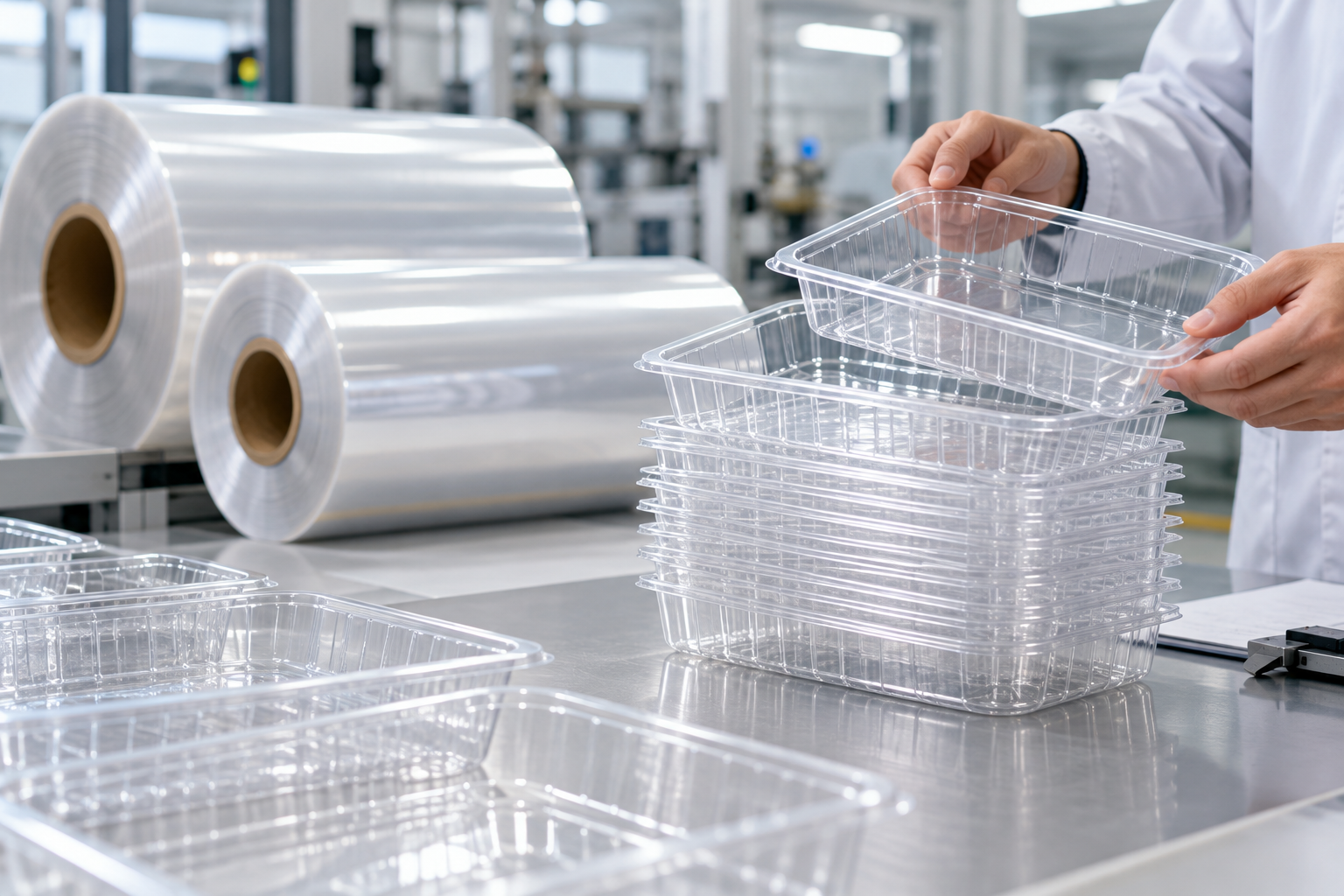
Consider a tray-handling problem: PET trays separate readily from a nested stack, but move out of position during transfer or slide against one another when stacked. Asking for less silicone may seem like the obvious response. It is premature until the contact surfaces and the unwanted movement are clear.
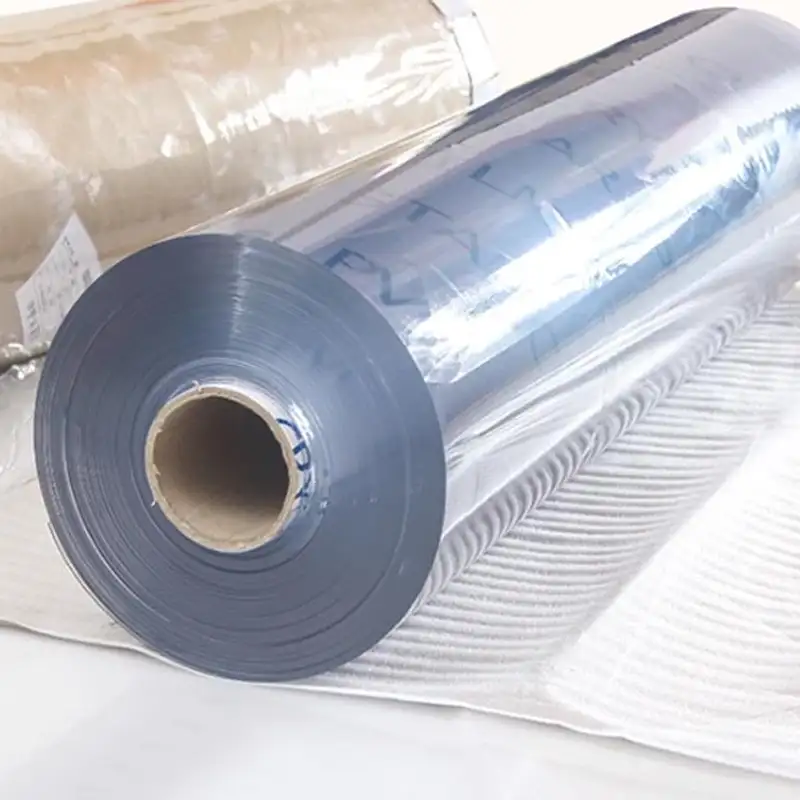
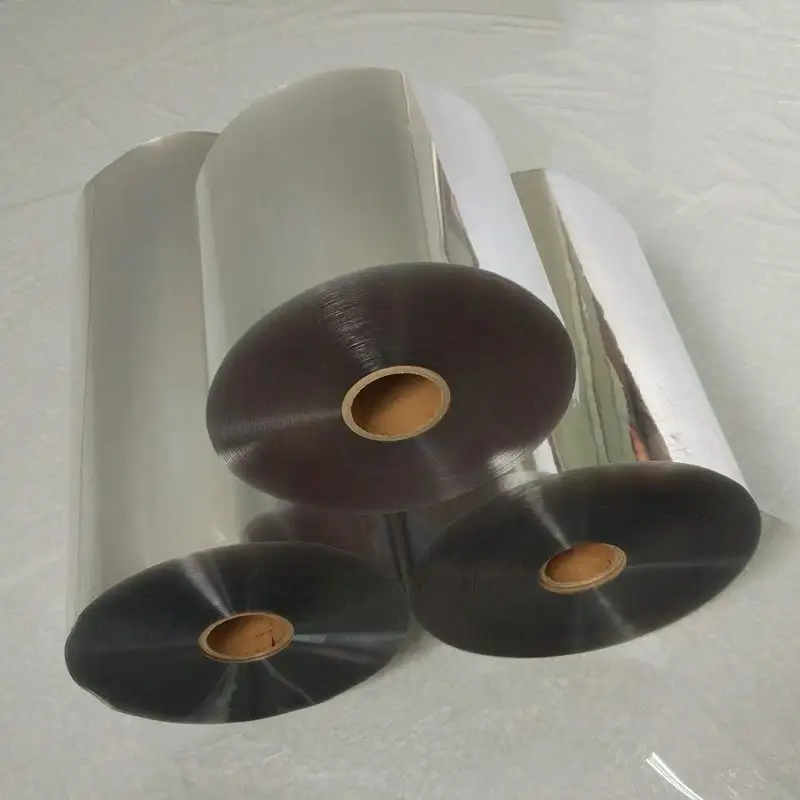
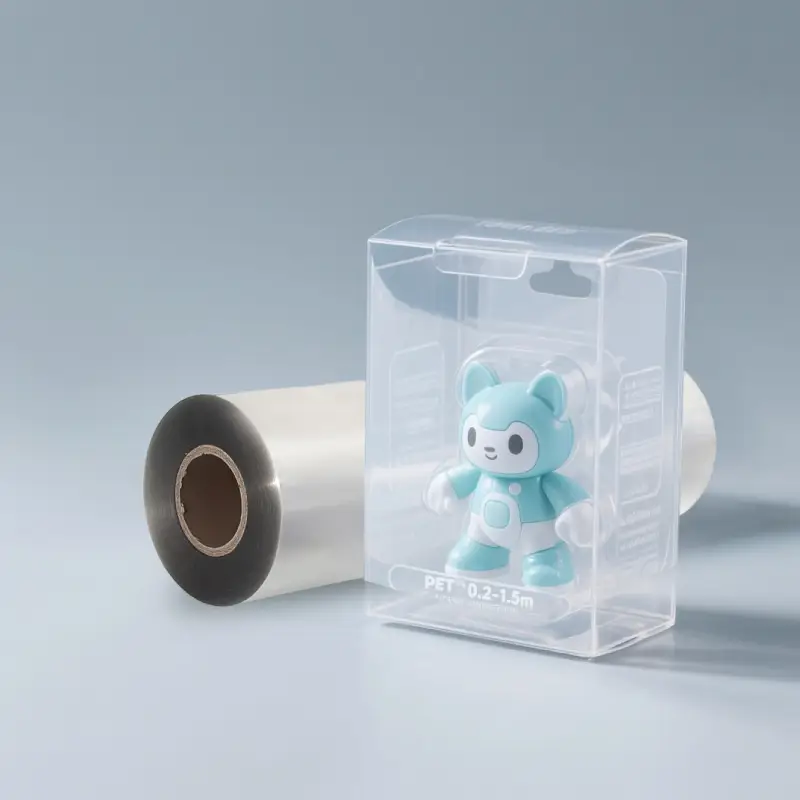
For silicone coated PET film used as thermoforming rollstock, easy separation and controlled tray handling are separate requirements. A surface specification needs to address both. Coating amount, distribution and the treated side deserve review, alongside tray geometry, contamination and handling conditions.
We would start with one question: what is sliding against what?
Identify the surfaces involved before changing the sheet
A tray moving on a conveyor presents a different contact pair from two nested trays moving against each other. A filled package sliding against a lid or transport insert introduces another combination. The same sheet description cannot explain all three situations.
Mark the tray drawing or photographs to show the actual contact areas. Identify whether movement occurs at the base, rim, sidewall or nesting features, and whether the opposing surface is PET, another packaging material or handling equipment. Record whether the trays are empty or loaded and whether movement starts during stacking, acceleration, stopping or storage.
This establishes which sheet face becomes the relevant tray surface. Calling a roll face “top” is insufficient if its orientation changes between unwinding and forming. Agree a face designation and connect it to the inside or outside of the finished tray.
If only one tray design shows the problem, investigate its contact geometry as well as the sheet. If several designs change behavior with a particular material lot, a surface specification comparison becomes more useful. Neither observation proves the cause, but each helps narrow the investigation.
Separate easy separation from excessive handling slip
Silicone-oil treatment is used on anti-block PET to help contacting surfaces separate. That does not mean the purchasing target should be the lowest possible friction.
Blocking concerns surfaces sticking together. Handling slip concerns how readily one surface moves across another. Successful separation does not establish that a tray will remain stable during transport, and greater resistance to sliding does not automatically mean acceptable separation.
We would specify the required outcomes separately: reliable separation at the intended contact points, plus acceptable movement during the defined handling operation. Reducing treatment without checking both could exchange a sliding concern for difficult separation.
This distinction also prevents an ambiguous RFQ. “Good slip” may mean easy feeding to one person and stable stacking to another. Describe the required behavior instead: which surfaces must release, which must resist unwanted movement, and under what conditions.
Review coating amount, distribution and treated side together
Once the contact pair is understood, discuss whether surface treatment could be contributing. Three questions matter more than a general request for “less silicone.”
Is the treatment amount appropriate for the application? A different amount may change separation and sliding behavior, but the relationship must be checked on the selected sheet and contact surfaces. A coating amount alone is not a finished-tray performance specification.
Is the treatment sufficiently uniform? Local differences in coverage could contribute to uneven behavior across the sheet or between samples. An average value may conceal variation. Ask how uniformity is assessed across the width and along a roll, and how those checks relate to the supplied samples.
Which face is treated? Confirm whether treatment is applied to one face or both and how the faces are identified. Where different tray surfaces have different functions, treatment orientation can matter as much as the nominal amount. A change in treated side is an option to discuss and verify, rather than an assumed remedy.
Our recommendation is to review those factors together. A lower nominal amount will not necessarily resolve inconsistent coverage or a misunderstanding about the treated face.
Keep non-material causes in the comparison. Nesting features, base shape and dimensional variation can alter how trays contact each other. Dust, oil or other residues may change surface behavior. Moisture, loading and handling conditions may also contribute. Retain representative samples as received; cleaning or wiping them before the initial comparison can remove evidence of the original condition.
Where printing, bonding or sealing uses the same face, include that operation in the discussion before agreeing a treatment change. Solving a handling issue is insufficient if the revised surface no longer meets another application requirement.
Ask how the supplier will control and compare the surface
A useful supplier discussion connects the treatment description to repeatable checks. “Silicone coated PET sheet roll” identifies a material option, but leaves the acceptance basis open.
| Purchasing concern | Question to agree with the supplier | Why it matters |
|---|---|---|
| Treatment identity | What treatment description and face designation will appear on the agreed specification? | Reduces ambiguity between orders and samples. |
| Treatment consistency | How are treatment amount or application consistency monitored, and what can be documented? | Helps distinguish a nominal setting from controlled output. |
| Sampling coverage | Which roll positions and locations across the width will be sampled? | Avoids approval based on one convenient sample. |
| Comparative behavior | Which reference material and contact surfaces will be used? | Makes differences easier to interpret. |
| Repeat supply | How will samples, roll identification and lot information be linked? | Supports investigation if later deliveries behave differently. |
These are questions to resolve with the selected supplier, rather than assumptions about equipment or process capability.
For a comparison, use retained material with acceptable handling where available, together with representative material showing the concern. Identify the sheet faces and compare under the same agreed conditions. Keep material construction, gauge, tray design and handling conditions comparable so that several changes do not obscure the result.
A flat-sheet friction check can help compare surfaces. It cannot reproduce every contact condition in a formed tray. Pair it with a focused application check using the actual contact areas and intended handling operation. Record heating, forming or other processing differences if they occur, without turning the investigation into an equipment-adjustment exercise.
We would not approve repeat supply from one favorable hand test. Agree sampling coverage and retain an identified reference so subsequent orders can be assessed on the same basis.
Agree acceptance before requesting treatment changes
“Less slippery than the current sample” is a direction for development, not a complete purchasing requirement. Before requesting a revised treatment, agree what will count as acceptable.
The acceptance agreement should cover:
- Contact pair and orientation: the two surfaces being compared, their face designations and the relevant tray locations.
- Sample condition: storage, conditioning, cleanliness, load and time between forming and assessment, where relevant.
- Slip assessment: the agreed method, whether it evaluates the start of movement or continued sliding, and application-specific limits.
- Separation assessment: how sticking, separation difficulty or multiple-tray pickup will be evaluated.
- Sampling and disposition: sample quantity, roll locations, check frequency and how inconsistent results will be handled.
No single friction target can be prescribed for every PET tray. A numerical result is useful only when its method and conditions are defined and its relationship to the handling requirement is understood. A documented application check may also be needed to judge whether the result is acceptable in use.
If excessive movement remains associated with the treated contact surface under controlled comparisons, discuss a treatment adjustment. If behavior varies by location, investigate distribution. If the issue follows tray geometry or residue conditions, changing the coating specification alone may leave the problem unresolved.
DESU supplies silicone-oil-coated anti-block PET and an embedded anti-block PET option. An alternative may deserve comparison where surface treatment conflicts with handling or downstream requirements, but it still needs its own acceptance checks. We would choose between options by the required separation and handling behavior rather than by assuming that silicone-free material must solve the problem.
FAQ About PET Sheet Slip Control
Can a coefficient-of-friction value specify the silicone coating amount?
No. A coefficient-of-friction result describes behavior under particular test conditions; it does not uniquely identify the coating amount. Specify the contact pair, method and conditioning, then ask the supplier how treatment control will support the agreed performance requirement.
Should comparison samples be wiped clean before testing?
Keep an initial set in its received condition. Wiping can change the surface and remove residues relevant to the investigation. If contamination is suspected, compare a separate set using an agreed cleaning procedure and identify those results separately.
Can a treatment change be approved using flat sheet alone?
Flat sheet can support an initial comparison, but approval should also address the formed tray when the requirement concerns tray handling. The relevant contact locations, orientation and loading need to represent the intended application, while separation remains acceptable.
Does switching to embedded anti-block PET guarantee less tray sliding?
No. Embedded anti-block PET is an alternative to evaluate, not a guarantee of greater handling stability. Compare its separation, sliding behavior and downstream compatibility against the same application-specific acceptance criteria before changing the purchase specification.
Send DESU your tray application, photographs or drawings showing the contact surfaces, current sheet specification and purchasing requirements. We can discuss suitable samples or a quotation around the separation and handling behavior your project needs.
Related Articles
CONTACT PET-SHEET.COM
Our professional sales staff and technicians will determine the final characteristics of the product and material solution for the customer specific application and will provide the customer with a quote and a detailed time schedule, Please fill the form to contact our professional sales team.- Main Category
- APET Sheet Roll
- ESD Antistatic PET Sheet Roll
- GAG Sheet Roll
- PETG Sheet Roll
- RPET Sheet Roll
- Thermoforming PET Sheet Roll
- Latest Products