 PET-SHEET.COM


What Should an RPET Sheet Supplier Prove About Batch Traceability?
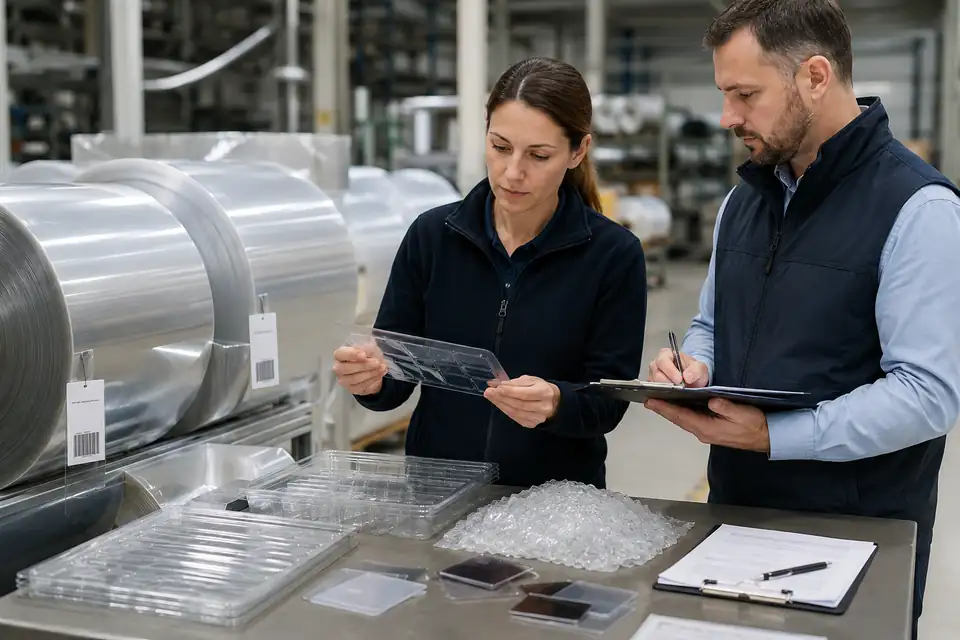
Traceability is a purchasing control, not a slogan
An RPET sample can form well and still leave the buyer with a weak approval trail. Which production lot did it represent? Which roll was tested? Can the recycled-content evidence be tied to that lot, and can the same information be retrieved when the repeat order arrives?
A useful supplier review begins by defining the chain the buyer needs to follow: inquiry, approved sample, production lot, individual rolls, shipment and repeat-order comparison. The supplier does not need to prove every possible system. It needs to show that the records requested for this project are available, linked and retrievable.
Define the RPET application and the consequence of a mix-up
State what the sheet will become, which market it serves and which attributes are critical after forming. A display tray concerned mainly with appearance has a different evidence priority from a package governed by a customer-specific recycled-content statement or a tightly controlled forming process.
Rank the risks. These may include using the wrong lot, losing the link between a test result and the delivered roll, receiving an unexplained material change, or being unable to compare a complaint roll with the approved baseline. The record set should be proportional to those risks.
Ask how lots and rolls are identified
Request an example of the supplier’s lot and roll identification format. Confirm where the identifier appears—label, packing list, certificate or another agreed document—and whether individual rolls can be traced back to the production lot. A date alone may be too broad if several runs or formulations were produced that day.
The buyer should also define how labels must survive storage and internal handling. If a roll is split, repacked or moved to production, the internal material movement must preserve the original supplier identifier or create a documented cross-reference.
Connect recycled-content evidence to the delivered material
Do not treat a general recycled-content statement as proof for every shipment. Ask what project-specific evidence is available, which entity issues it, what period or material it covers, and how it references the production or delivery lot.
The required evidence depends on the buyer’s own claim and market obligations. If a certification or chain-of-custody record is required, name it explicitly and verify the documents for the selected project. No certification, percentage or guarantee should be assumed from the term RPET alone.
Link samples and test results to the same lot
A test report is useful only when the tested sample can be identified. Require the report to carry the relevant lot or sample code, test date, method and result. Define who selected the sample and whether it represents a roll, a production lot or a shipment.
Keep the approved trial sample and its records together. When a later roll behaves differently, compare identifiers, retained samples and agreed checks before changing several machine variables. That sequence makes the investigation faster and prevents an unsupported conclusion about the material.
Decide what must accompany each shipment
Create a short shipment-document list instead of asking for all available paperwork. It might include the purchase-order reference, lot and roll list, agreed material description, quantity, production or shipment date, and project-specific test or recycled-content documents.
Set the timing as well. If documents are needed before release to production, receiving must know what blocks the roll and who can approve an exception. Traceability fails when the records arrive after the material has already been consumed.
| Evidence point | Buyer question | Acceptance record |
|---|---|---|
| Lot identity | How is the production lot defined? | Lot code and definition |
| Roll linkage | Can each roll be linked to the lot? | Roll list or label cross-reference |
| Recycled content | Which evidence applies to this material? | Project-agreed document linked to lot or shipment |
| Testing | Which sample was tested and by which method? | Report with sample or lot identifier |
| Retention | How long can records and samples be retrieved? | Agreed owner and retention period |
| Change control | What changes trigger notification? | Written notification rule |
Compare repeat orders with an approved baseline
Freeze the fields that matter after the trial: material description, key dimensions, appearance reference, agreed checks, sample plan and document requirements. The next shipment can then be compared with the same baseline rather than with memory.
Also define change notification. Ask which material, process or documentation changes the supplier will report before delivery and who receives the notice. If a difference cannot be explained through records, pause the lot for a focused review or trial instead of blending it into ordinary production.
FAQ About RPET Batch Traceability
A good system is specific enough to retrieve evidence without burying the buyer in paperwork.
Is a certificate of analysis enough for RPET traceability?
Only if it contains the required project information and can be linked to the delivered lot or rolls. A generic document without a material identifier does not complete the chain.
Should every roll have a unique number?
That depends on the buyer’s risk and receiving process. At minimum, the identification method must let the buyer connect a roll to the production lot and shipment. Define the required granularity before approval.
How long should samples and records be retained?
There is no universal period. Set it from the order cycle, complaint window, customer requirements and applicable obligations, then identify who retains each record and how it can be retrieved.
Build the RPET supplier evidence checklist
Send the intended application, lot-definition needs, recycled-content evidence request, sample plan, acceptance checks, shipment-document list, retention period and change-notification rules to the RPET sheet supplier. Compare suppliers on the same evidence chain, then test whether the promised records can actually be retrieved for the sample and first production lot.
Related Articles
CONTACT PET-SHEET.COM
Our professional sales staff and technicians will determine the final characteristics of the product and material solution for the customer specific application and will provide the customer with a quote and a detailed time schedule, Please fill the form to contact our professional sales team.- Main Category
- APET Sheet Roll
- ESD Antistatic PET Sheet Roll
- GAG Sheet Roll
- PETG Sheet Roll
- RPET Sheet Roll
- Thermoforming PET Sheet Roll
- Latest Products