 PET-SHEET.COM


What Thickness for Thermoforming Trays? A Practical Guide for Packaging Buyers
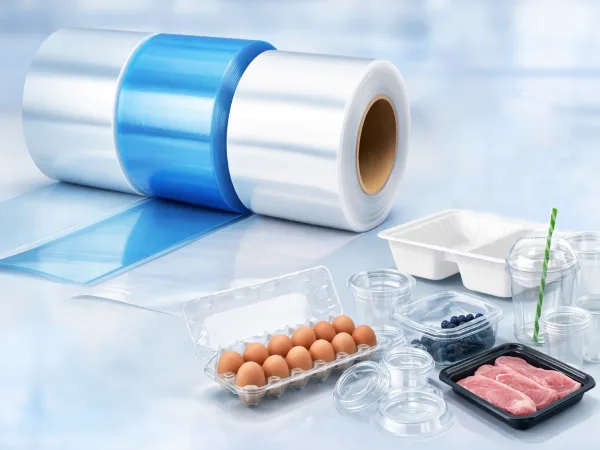
Selecting the correct thickness for thermoforming trays is one of the most critical decisions in packaging design. The thickness of a plastic sheet directly affects tray rigidity, cost efficiency, forming performance, and product protection.
For manufacturers working with PET, PP, or PS sheets, even a small change in thickness—such as from 0.45 mm to 0.55 mm—can significantly impact the final tray quality and production yield.
This guide explains how to determine the ideal thickness for thermoforming trays, based on real-world packaging applications, material behavior, and manufacturing constraints.
Quick Answer: Typical Thickness for Thermoforming Trays
Most thermoformed packaging trays fall within the following thickness range:
| Application | Typical Thickness |
|---|---|
| Fruit & vegetable trays | 0.25–0.45 mm |
| Fresh food trays | 0.35–0.60 mm |
| Bakery packaging trays | 0.30–0.50 mm |
| Takeaway food trays | 0.50–0.80 mm |
| Ready-meal trays | 0.60–1.00 mm |
| Electronics blister trays | 0.40–0.80 mm |
In general:
0.35 mm – 0.60 mm is the most common thickness range for thermoforming trays.
However, choosing the correct thickness requires evaluating multiple factors.
Key Factors That Determine Tray Thickness
1. Product Weight
The weight of the packaged product is the primary factor influencing tray thickness.
| Product Weight | Recommended Thickness |
|---|---|
| Under 200 g | 0.25–0.35 mm |
| 200–500 g | 0.35–0.50 mm |
| 500–1000 g | 0.45–0.70 mm |
| Over 1 kg | 0.70–1.00 mm |
Heavier products require thicker sheets to maintain structural rigidity and stacking strength.
2. Tray Design Depth
Deeper trays require thicker sheets because the thermoforming process stretches the plastic material.
For example:
- shallow trays → 0.35 mm may be sufficient
- deep trays → may require 0.50 mm or more
A deep draw ratio often reduces final wall thickness by 30–40%.
3. Material Type
Different plastics behave differently during thermoforming.
PET Sheet
- Excellent rigidity
- Good clarity
- Often used at 0.35–0.60 mm
PP Sheet
- Higher heat resistance
- Lower stiffness than PET
- Often requires slightly thicker material
PS Sheet
- Good forming ability
- Lower impact resistance
4. Machine Capability
Thermoforming machines have different heating zones and forming pressures.
Older machines may require thicker sheets to prevent forming defects such as:
- tearing
- uneven walls
- deformation
Recommended Thickness by Application
Fresh Produce Packaging
Typical trays for fruits and vegetables use 0.30–0.45 mm PET sheet.
Advantages:
- lightweight
- cost-efficient
- good transparency
Ready-Meal Packaging
Ready-meal trays must withstand heating, transportation, and stacking.
Typical thickness:
0.60–0.80 mm
Common materials:
- CPET
- PP
Bakery Packaging
Bakery trays prioritize clarity and appearance.
Typical thickness:
0.30–0.50 mm PET
Cost vs Thickness Optimization
Thickness directly affects packaging cost.
Example:
| Thickness | Cost Impact |
|---|---|
| 0.35 mm | baseline |
| 0.45 mm | +20% material |
| 0.60 mm | +40% material |
However, reducing thickness too much can cause:
- tray collapse
- product damage
- transportation losses
The optimal approach is engineering-based thickness selection, balancing strength and material cost.
Decision Framework: How Buyers Choose Thickness
Professional packaging buyers usually follow three steps:
Step 1 – Define product weight
Step 2 – Evaluate tray depth
Step 3 – Select material
Then choose the thickness accordingly.
Common Mistakes When Selecting Thickness
Choosing thickness based only on price
Cheaper thin sheets may increase:
- rejection rates
- machine downtime
Ignoring thermoforming stretch
Final tray walls are always thinner than the sheet thickness.
FAQ
Q1. What is the most common PET thickness for thermoforming trays?
Most PET thermoforming trays use 0.35 mm to 0.50 mm sheets.
Q2. How much thickness is lost during thermoforming?
Typically 20–40% depending on tray design.
Q3. Can thinner sheets reduce packaging cost?
Yes, but excessive reduction can lead to structural weakness and higher defect rates.
Q4. What thickness is used for ready-meal trays?
Usually 0.60–0.80 mm, especially for microwaveable packaging.
CONTACT PET-SHEET.COM
Our professional sales staff and technicians will determine the final characteristics of the product and material solution for the customer specific application and will provide the customer with a quote and a detailed time schedule, Please fill the form to contact our professional sales team.- Main Category
- APET Sheet Roll
- ESD Antistatic PET Sheet Roll
- GAG Sheet Roll
- PETG Sheet Roll
- RPET Sheet Roll
- Thermoforming PET Sheet Roll
- Latest Products