 PET-SHEET.COM


What to Specify When Buying Clear RPET Sheet for Produce Trays
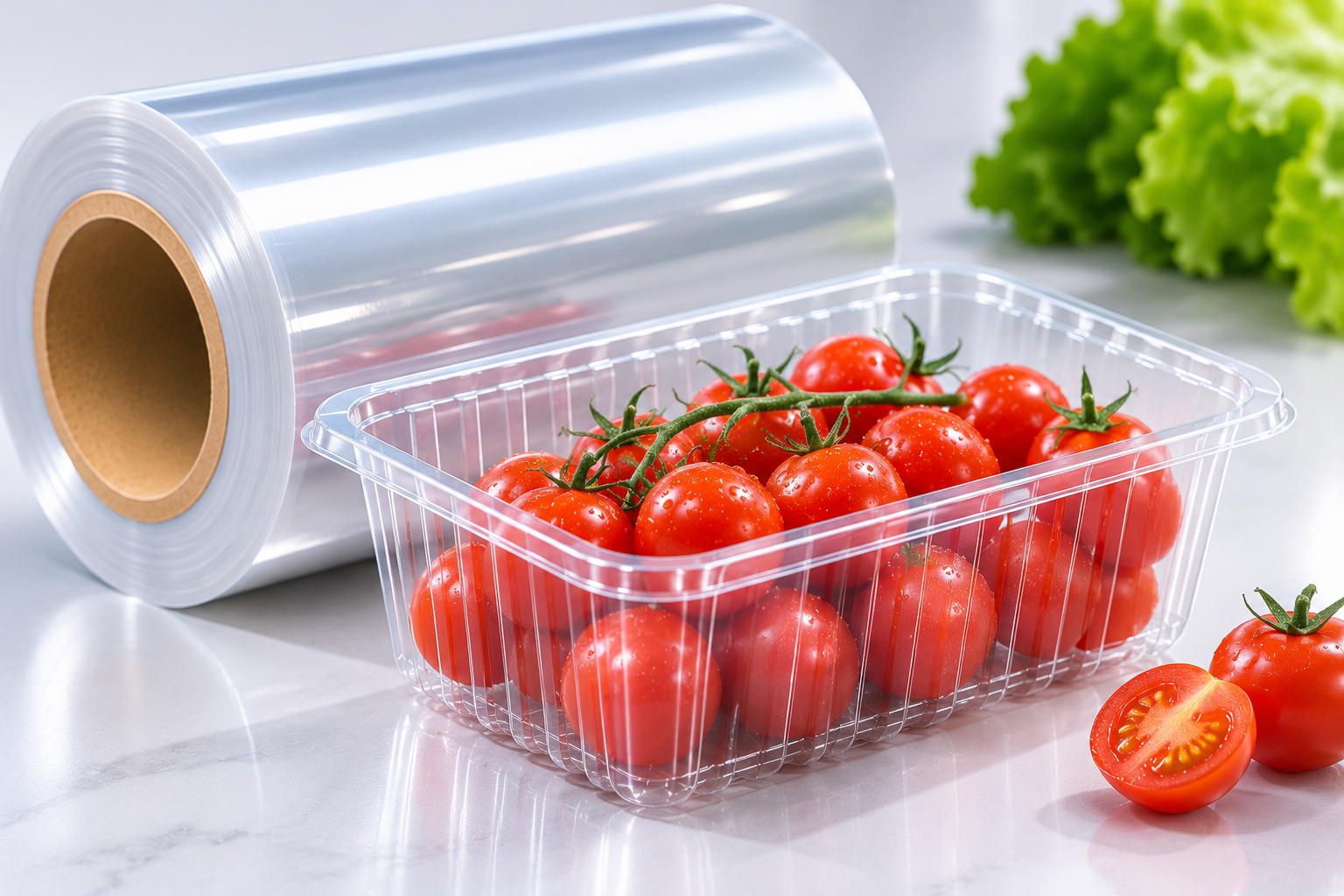
The retailer wants post-consumer recycled content in the next produce tray, and the packaging team wants shoppers to see the fruit as clearly as they do through the current pack. A quote for “clear RPET sheet” leaves both requirements open. The percentage might apply only to one layer, and a flat swatch gives you little to judge about how the finished sidewall will look on shelf.
For RPET thermoformed trays, put two separate acceptance criteria on the sheet specification: a documented post-consumer recycled content requirement and a visual standard for the formed tray. Carry both into repeat orders. Confirm food-contact suitability separately for the exact sheet and intended use.
Define what the recycled-content percentage covers
Start by deciding whether the post-consumer recycled content (PCR) figure is a minimum for acceptance or a target you can discuss during sourcing. If the retailer requires a minimum, write it as a minimum and specify whether it must be met for each supplied lot. Ask the supplier what record will support the declared percentage at delivery.
We would put the calculation basis in the RFQ before comparing quotes. For a whole-sheet claim by weight, divide the weight of post-consumer recycled material in the sheet by the total sheet weight. If a supplier quotes a percentage for the core of a multilayer sheet, ask for the corresponding whole-sheet percentage on the same weight basis. Ask the supplier to report any pre-consumer recycled content separately so purchasing can compare like for like.
Higher PCR content can affect clarity and forming consistency. The acceptable balance depends on the sheet and the tray. If the percentage is flexible, we would first qualify a construction that meets the purchasing target and the shelf appearance requirement under representative forming conditions. A higher-content proposal can then be assessed against the same visual standard.
Agree on what an acceptable tray looks like
Use a formed tray made with representative tooling and sheet gauge as the appearance reference. A flat swatch is useful for screening, but the package drawing tells you where to judge visibility. In a berry punnet, for example, the shopper may look through the sidewall as well as the lid. An area around a corner or rib may look different from a broad panel once the sheet has been drawn into shape.
Review the empty tray under agreed lighting against a consistent background, then check a filled pack under representative display conditions. The empty tray makes it easier to see faint tint and isolated specks. The filled pack shows whether those differences matter when someone looks at the produce. Mark the areas that matter on the drawing and agree on viewing distance and orientation so both sides can repeat the comparison.
| Appearance check | What to agree before ordering |
|---|---|
| Tint | Use the approved formed tray as the color reference. If a slight tint is acceptable, keep a boundary sample that shows the strongest acceptable shift in the main viewing area. |
| Haze | Identify the panels where loss of visibility matters. If you use a numerical limit, agree on the measurement method, specimen and location. Record whether the result applies to flat sheet or to a suitable area of the formed part. |
| Visible specks | Define the inspection zones and agree on the allowable size and count for each inspected area. Use physical boundary samples where inspectors need help judging borderline specks. |
We would give the main viewing panel the tightest visual limit when that is where shoppers assess the produce. If the brand accepts more variation at the flange, record that separately. A single instruction such as “match the clear sample” leaves too much room for disagreement when the next roll arrives.
Carry the approval into repeat orders
Before the first production order, agree on what constitutes a sheet lot and how the roll labels link to it. Specify which records accompany each shipment, including the sheet designation, the lot and roll identifiers, and the documentation that supports PCR acceptance on the agreed basis. If a shipment contains multiple lots, keep their records and samples identifiable through inspection and forming.
Retain a labeled flat-sheet sample and a formed tray from the qualification run. Record the sheet lot, gauge, tray drawing revision and appearance reference used for approval. For repeat orders, agree on who samples the rolls, how many rolls to sample per lot, when to form check trays and who can release the lot. If you see a shift in appearance, comparing the retained flat sheet and the check tray with their respective references can help narrow down whether to investigate the incoming material or the forming conditions first.
Put change notification into the purchase specification. Agree which changes to the sheet construction, recycled feedstock or surface treatment trigger a fresh review. Hold a lot for review if its PCR documentation fails the agreed requirement or its formed samples fall outside the appearance limits. Each criterion needs its own release decision.
Confirm food-contact suitability for the exact sheet and use
Give the supplier the destination market, produce type, whether the food touches the tray directly, and the expected contact time and temperature. Ask for supporting documentation that identifies the proposed sheet construction and covers those conditions. Where the sheet has distinct layers or a surface treatment, make sure the documentation identifies the construction you intend to order.
We would have the packaging compliance team review that evidence before releasing the sheet specification for production. If the construction or intended use changes, have the team check whether the existing documentation still applies.
FAQ About Buying Clear RPET Sheet
Can we use our current virgin PET tray as the appearance reference?
Yes, if the retailer expects the new tray to look like the current pack. Form the RPET candidate to the same drawing and compare the two with the intended produce inside. If the retailer accepts a visible difference, approve and retain an RPET boundary sample so future shipments can be judged against that limit.
What if a supplier can declare only an average PCR percentage?
Ask what the average covers and how it is calculated. If your specification requires a minimum for each supplied lot, ask for evidence tied to that lot before accepting it. If your program permits averaging, write the accepted scope and reporting period into the purchase specification.
How can we tell whether cloudiness on shelf is haze or condensation?
Compare a clean, dry formed tray with a filled pack after representative chilled storage and display. If the cloudiness appears on the chilled pack and clears when the surface dries, investigate condensation separately. Keep the dry-tray comparison for sheet appearance acceptance.
Can we use an approval for whole fruit on a tray for fresh-cut produce?
Ask your packaging compliance team to check the new use against the documentation for the exact sheet. Provide the fresh-cut product, contact conditions and destination market so the team can determine whether the existing evidence covers that application.
Share your tray drawing, target sheet gauge and roll width, PCR target and calculation basis, and an appearance reference with DESU. Include the intended food-contact conditions and purchasing needs so we can discuss a suitable sample or prepare a quotation against the same requirements.
Related Articles
CONTACT PET-SHEET.COM
Our professional sales staff and technicians will determine the final characteristics of the product and material solution for the customer specific application and will provide the customer with a quote and a detailed time schedule, Please fill the form to contact our professional sales team.- Main Category
- APET Sheet Roll
- ESD Antistatic PET Sheet Roll
- GAG Sheet Roll
- PETG Sheet Roll
- RPET Sheet Roll
- Thermoforming PET Sheet Roll
- Latest Products