 PET-SHEET.COM


When Is GAG Sheet Worth Specifying Instead of APET for Thermoformed Blisters?
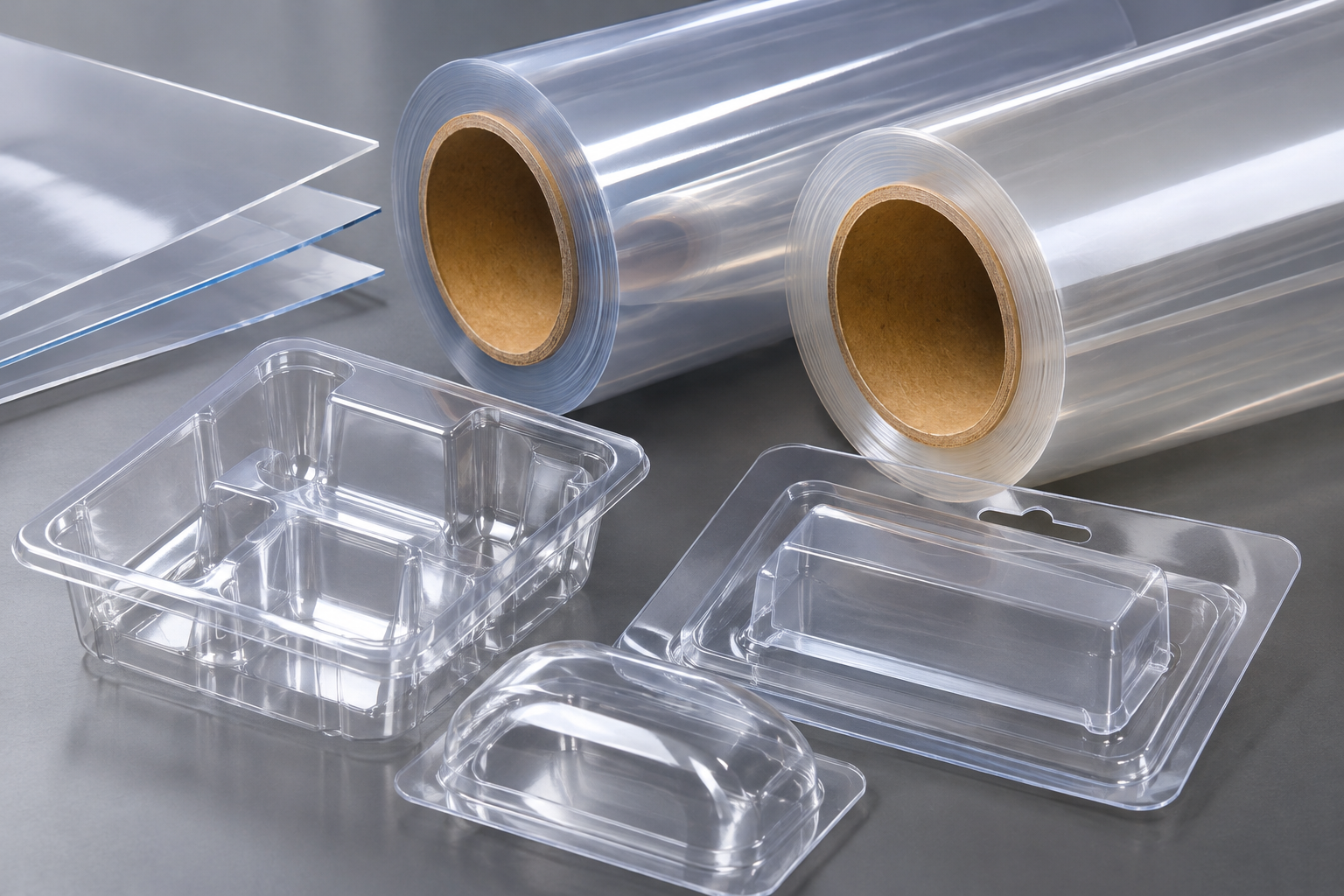
An APET blister looks acceptable after forming, but the packaging brief has changed: the card-sealing route is different, the display face has tighter appearance requirements, or a revised cavity puts more demand on the sheet. A GAG quotation arrives alongside the existing APET offer. What would justify specifying the different construction?
GAG sheet is worth evaluating when a defined requirement gives you a reason to assess PETG outer layers over an APET core. It is worth specifying only when representative samples meet that requirement and the purchasing comparison supports the change. A three-layer construction alone does not establish better forming, sealing or appearance for your blister.
We would keep an APET specification that already meets the complete packaging brief unless GAG demonstrates a useful benefit. The first step is to make that brief precise enough to compare the materials.
Define the blister geometry and downstream joining requirements
Start with the finished pack drawing and the product it must retain. Cavity depth matters, but so do narrow corners, changes in section, the flange, and any loaded hanging feature. Together, these determine where to assess material distribution, fit and handling performance. A nominal sheet thickness cannot describe those requirements on its own.
Then identify how the pack closes. A blister sealed to a coated card presents a different material interface from a mechanically retained blister or a joined clamshell. For a card-sealed pack, provide the card construction, sealing coating or adhesive, and the required opening behavior. For another joining route, identify the mating material and intended joint.
This distinction can prevent an unnecessary material change. A blister that forms cleanly may still have an unsuitable surface for the specified adhesive or printing system. Conversely, a sealing problem does not automatically mean the APET base material must be replaced.
Our starting point would be the complete material interface: which sheet face contacts which coating, adhesive or mating surface, and what must that connection withstand? That is more useful than asking whether GAG is generally “easier to seal.”
Identify what the existing APET specification cannot meet
Before asking for a GAG alternative, describe the shortfall in observable terms. “Better quality” leaves too much room for different interpretations.
For example, the requirement might concern visible marking after handling, appearance around a drawn corner, flange condition, or repeatable attachment to the selected card. These are different questions. They may call for different sheet specifications, and some may involve factors beyond the sheet.
Separate three situations:
- APET meets the requirement consistently: retain it as the purchasing baseline. GAG needs a measurable reason to displace it.
- APET performance varies: investigate gauge consistency, surface condition, formulation and roll differences before assuming another construction will solve the problem.
- The application has a new requirement: evaluate APET and GAG against the revised brief rather than treating the old approval as sufficient.
Two sheets carrying the same material name and nominal gauge can behave differently because their surfaces, formulations and roll consistency differ. Changing to GAG while leaving those details undefined can replace one uncertain specification with another.
We would also separate scratch appearance from layer construction. PETG outer layers do not, by themselves, constitute an anti-scratch specification. If visible damage is the concern, define the handling exposure and acceptable appearance first.
Compare APET and GAG against those requirements
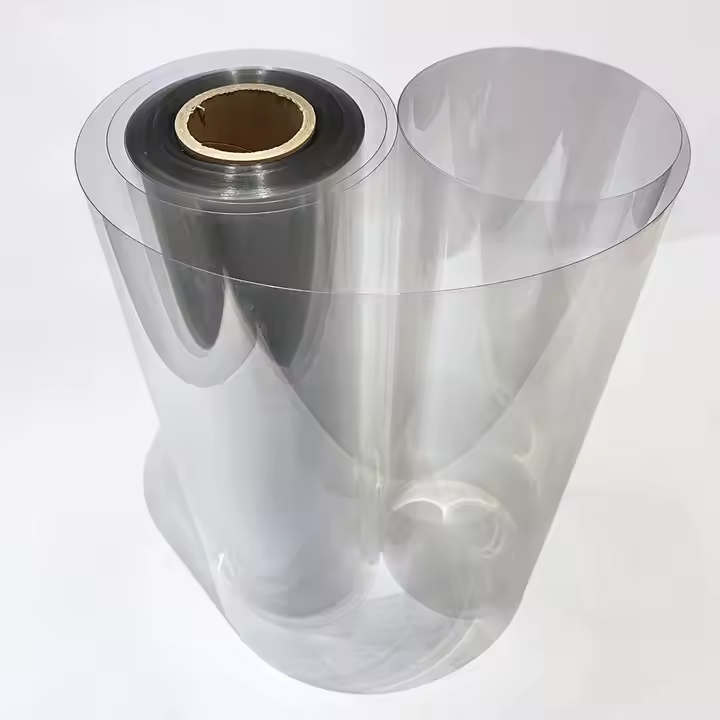
GAG is a three-layer co-extruded PETG/APET/PETG sheet: PETG forms the two outer layers, with APET between them. That makes the outer-layer specification relevant wherever the sheet surface interacts with printing, bonding or joining. The complete construction still needs to perform through forming and subsequent handling.
The useful comparison is therefore between two defined sheet offers for the same pack—not between material names in isolation.
| Decision factor | APET assessment | GAG assessment | Purchasing implication |
|---|---|---|---|
| Blister geometry | Establish whether the proposed sheet meets the formed-part requirements | Assess the proposed layered construction on the same geometry | Judge the formed blister rather than a flat sample alone |
| Sealing or joining | Confirm compatibility with the actual card, adhesive or mating material | Confirm compatibility of the PETG surface and any treatment with that same system | Approve the complete interface |
| Display appearance | Agree limits for colour, haze, inclusions and handling marks | Apply the same visual standard after forming and handling | Do not assume that GAG automatically improves appearance |
| Surface condition | Specify coatings, treatments and the relevant face | Specify treatments alongside the outer-layer construction | Keep surface differences visible in the quotation |
| Repeatability | Compare supply against the approved baseline | Establish a baseline for construction, dimensions and appearance | One exceptional sample is insufficient for ongoing approval |
| Cost | Establish material consumption and acceptable output | Assess the quoted material cost alongside acceptable output | Pay for a demonstrated application benefit |
If APET meets the appearance, retention and joining requirements at acceptable output, a higher-priced GAG offer needs a specific justification. That justification might be a demonstrated improvement in a required joining operation or a more dependable result against a demanding acceptance criterion. It should not be a general expectation attached to the PETG name.
Price per kilogram remains relevant, but it does not answer the whole purchasing question. Compare actual material consumption, rejected parts and interruptions associated with each candidate. Do not assume that a different construction permits a thinner gauge or higher output; either change needs its own evidence.
Clarify layer construction and the specifications needed for comparable offers
“GAG, same thickness and width” is an incomplete request for quotation. Total gauge does not tell you the thickness or proportion of the PETG outer layers. Ask each supplier to identify the proposed layer arrangement and layer proportions or thicknesses, including how those characteristics will be controlled in repeat supply. Do not assume equal layers or an unstated standard ratio.
DESU offers GAG sheet in thicknesses of 0.18–1.7 mm and widths of 250–1400 mm. Availability should be confirmed for the selected structure, gauge, colour and roll format. These dimensions describe supply options; they do not prescribe the correct gauge for a particular blister.
For comparable offers, put the following details on the same RFQ:
- Total sheet thickness, tolerance, width and width tolerance.
- APET construction or PETG/APET/PETG construction, with the proposed GAG layer proportions identified.
- Colour and appearance requirements, supported by an agreed visual standard where useful.
- Surface treatments, coatings, treated faces and downstream compatibility requirements.
- Core size, maximum roll diameter, permitted roll weight, winding direction and splice requirements.
- Required identification, sampling and acceptance documentation.
A quotation that changes construction, surface treatment and gauge simultaneously makes it difficult to understand what you are paying for. We recommend identifying each proposed difference explicitly, even when the supplier offers a complete alternative specification.
Assess representative samples using agreed acceptance criteria
A flat sample can help screen colour and obvious surface defects. It cannot establish suitability for the complete blister.
Request samples representative of the quoted construction and intended roll format, then assess the formed and assembled pack. Keep the comparison focused on material suitability rather than turning it into an open-ended exercise in machine adjustment. Record the conditions used so that the results remain interpretable.
Agree the acceptance criteria before seeing the samples. They should cover the features that could cause rejection: critical dimensions, material distribution at demanding features, flange condition, product retention, joining performance and display appearance. Specify measurement methods, inspection conditions and sampling quantities appropriate to the project rather than relying on “looks good.”
For appearance-sensitive packaging, inspect formed parts under lighting representative of the intended display. Examine them again after the handling steps that matter to the pack. A clean flat sheet is not necessarily an acceptable retail blister after forming, assembly and transport handling.
The same discipline applies to sealing. Assess the assembled pack with the intended card or mating material and agreed opening or retention criteria. A successful attachment on a substitute card does not approve the intended combination.
For repeat purchasing, retain the approved sheet specification, representative parts and trial observations. Ask how subsequent lots will be compared with that baseline, and use repeat samples or agreed lot checks where consistency is critical.
Prepare an application brief for a material recommendation and quotation
Before approaching an APET sheet roll supplier for a GAG alternative, bring the decision into one brief: the blister drawing, product weight and retention needs, current sheet specification, joining route, surface requirements, machine roll limits and acceptance criteria. Add the specific shortfall or new requirement that prompted the enquiry.
Ask for the proposed material construction, the reason for recommending it, and samples corresponding to the quotation. This gives an APET sheet manufacturer a concrete question to answer instead of an invitation to recommend a more elaborate material.
Our recommendation is to keep APET as the baseline when it meets the complete brief. Move GAG into evaluation when its PETG/APET/PETG construction addresses a defined need, and into the purchase specification when samples establish suitability and the cost comparison supports it. If neither candidate meets the requirement, revisit the specification and material interfaces before committing to either.
FAQ About Specifying GAG Sheet Instead of APET
Can I approve GAG for several blister designs after testing one design?
Only if the approval scope reasonably covers their differences. A change in cavity geometry, loaded features, surface requirements or joining materials may require additional assessment. Identify which designs the approval covers and evaluate any features outside that scope before extending it.
Can a GAG sample with different PETG layer proportions represent the quoted material?
It should not be treated as equivalent without an agreed technical basis. The sample construction must be identified, and any difference from the quotation must be resolved before approval. Request a representative sample when the difference could affect the requirement being evaluated.
Does switching from APET to GAG mean I can reduce sheet thickness?
No. A construction change alone does not justify a lower gauge. Assess the proposed thickness against material distribution, product retention, handling and joining requirements on the formed pack. Compare costs using the gauge that actually meets those requirements.
What should happen if a repeat delivery differs from the approved GAG sample?
Identify the affected lot and compare it with the agreed specification and retained approval samples. Document the difference using the agreed inspection or test method, and ask the supplier to assess it before accepting a substitution or changing the purchasing specification. Keep material that fails an agreed requirement separate from accepted stock.
Contact DESU with your blister drawing, current sheet specifications, joining details and purchasing needs to discuss suitable APET or GAG samples and request a quotation.
CONTACT PET-SHEET.COM
Our professional sales staff and technicians will determine the final characteristics of the product and material solution for the customer specific application and will provide the customer with a quote and a detailed time schedule, Please fill the form to contact our professional sales team.- Main Category
- APET Sheet Roll
- ESD Antistatic PET Sheet Roll
- GAG Sheet Roll
- PETG Sheet Roll
- RPET Sheet Roll
- Thermoforming PET Sheet Roll
- Latest Products